When a chimney fire breaks out, every second counts. If you hear a deep roaring sound in the flue or see thick smoke, follow the emergency procedure straight away:
1. Call the fire brigade (18 or 112),
2. Shut off every air supply (the draught),
3. Throw sand or salt into the firebox to smother the fire,
4. NEVER use water.
Once the danger has passed, prevention with Fulgurant catalytic chimney sweeping is your only insurance against it happening again.
How do you recognise a flue fire?
A chimney fire is not a "normal" fire.
It takes place inside the flue liner itself, where the tar has built up.
The warning signs are distinctive and should set off an immediate alert:
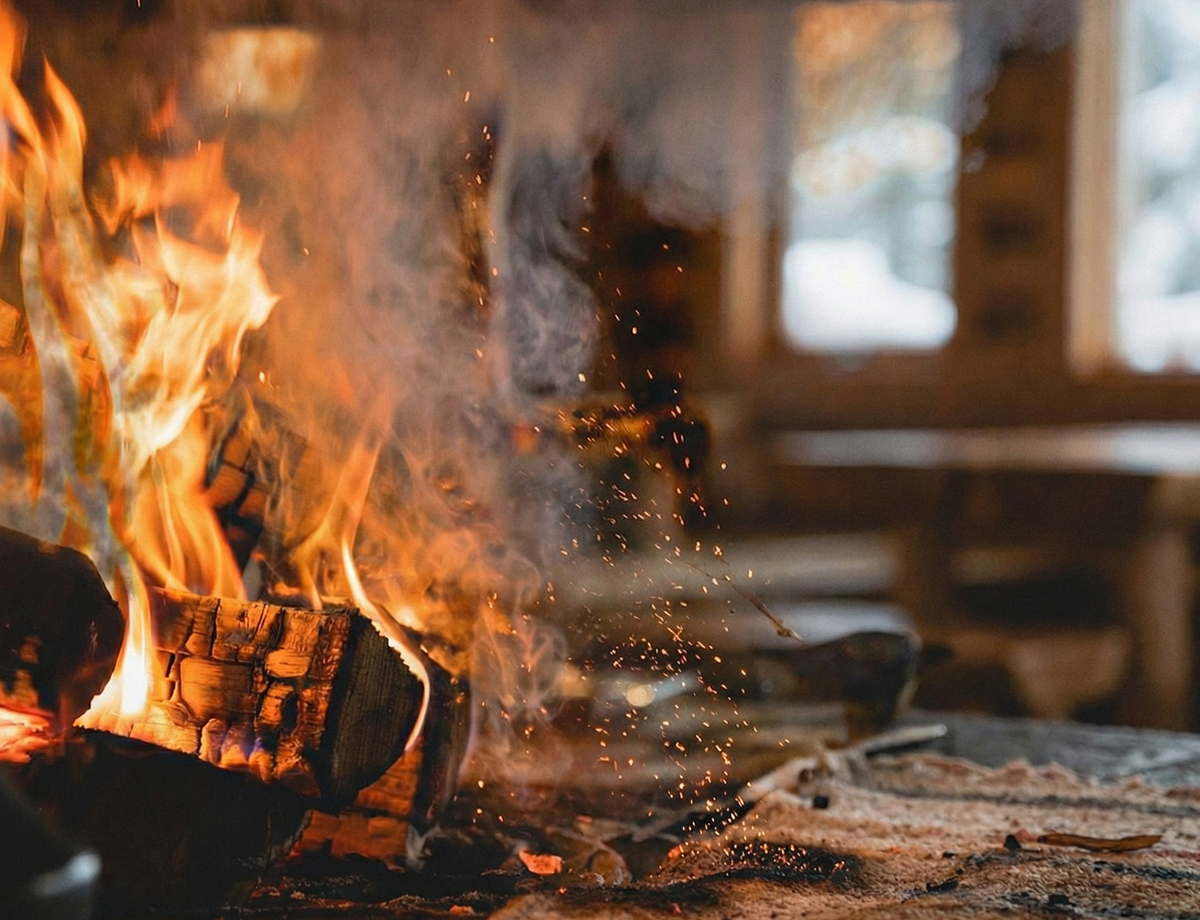
- The noise: an intense roaring, like a train going past
- The smell: an acrid smell of hot tar or rotten eggs.
- The sight: sparks falling into the firebox, or thick yellow/brown smoke coming out of the roof.
- The heat: the wall or the flue becomes burning hot to the touch.
The 5 steps to put out a fire that is starting
Stay calm and follow this "survival checklist" recommended by the emergency services:
- Raise the alarm immediately.
Dial 18 (France) or 112 (Belgium). Say clearly that it is a "chimney fire".
Get everyone out of the house.
- Cut off the oxygen.
Fire needs air. Close the damper, the air inlets of the stove or stove insert and the glass door.
If the firebox is open, try to block it with a metal plate, without putting yourself in danger.
- Smother the fire (no water!)
Throw a large amount of sand, soil or salt onto the burning logs.
Why? It cuts off the flammable vapours.
Never throw water on it, because it turns into steam instantly, which can make the flue explode (thermal shock).
- Move combustible items away
If you can, move furniture, rugs and curtains that are right next to the firebox out of the way to stop the fire spreading by radiant heat.
- Keep an eye on the walls
While you wait for the fire brigade, touch the walls. If they are burning hot, wet them down and move the furniture away.
Why did the fire start?
A clean flue does not catch fire.
The sole culprit is creosote (or glazed creosote). It is a crust of hardened tar, caused by incomplete combustion (damp wood) or by a poor draught.
This tar is highly flammable.
How do you stop it happening again?
After a chimney fire, the flue liner is often destroyed and has to be replaced.
The best defence is still chemical prevention.
1. Curative chemical chimney sweeping
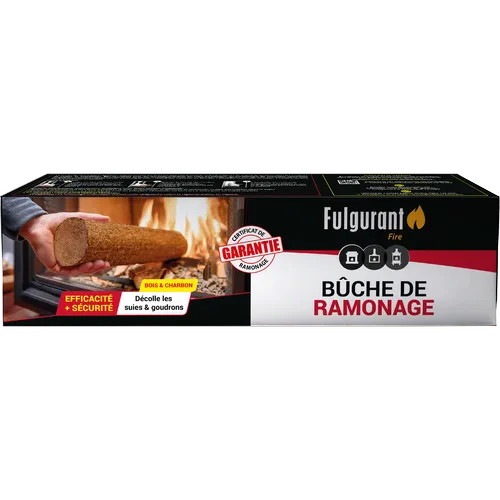
For a flue that is already dirty, using a Fulgurant chimney sweeping log is essential before the heating season. It releases catalysts that dry out the tar. The result : the creosote becomes crumbly and comes away, falling into the firebox or being drawn out during the next mechanical sweep.
2. Regular preventive maintenance
 View more
Chimney sweeping log
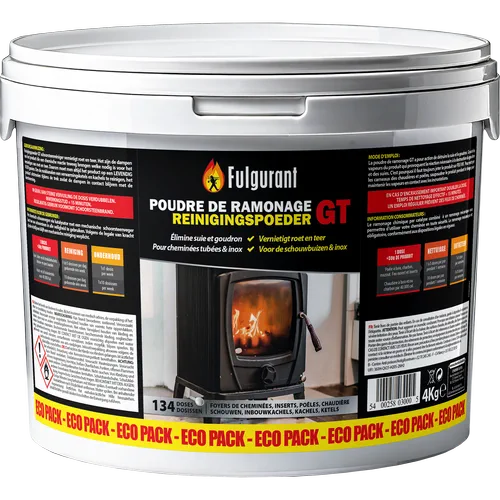
It releases catalysts that dry out the tar. Do not let soot settle in. What to do: use Fulgurant chimney sweeping powder every 10 fires. It neutralises the acidity of the smoke and stops new layers of tar forming.
 View more
FAQ: questions about chimney fires
Can you use an extinguisher on a chimney fire?
Yes, but only an ABC powder extinguisher, and only in the firebox. Do not empty it up into the rising flue, because the draught could blow the powder back at you. The aim is to put out the logs at the bottom, not the fire at the top.
Does insurance cover the damage from a flue fire?
Yes, fire is covered by your comprehensive home insurance. Be careful: the insurer will ask for proof of maintenance (an annual chimney sweeping certificate issued by a professional). Using Fulgurant chemical products is an extra safety measure that shows you acted responsibly, but it does not replace the legally required certificate.
How long does a chimney fire last?
It can last from a few minutes to several hours, for as long as there is creosote left to burn. Even once it is out, it can smoulder and flare up again. An inspection by the fire brigade (often with a thermal camera) is compulsory before you light anything at all again.
Conclusion: safety is not optional.
A chimney fire is traumatic, but it can be avoided. Once the emergency has been dealt with, your absolute priority must be to tackle the root of the problem: the tar.
Do not play with fire. Make your winter safe right now with Fulgurant.